I BOUGHT A SINGING BOWL - NOW WHAT?
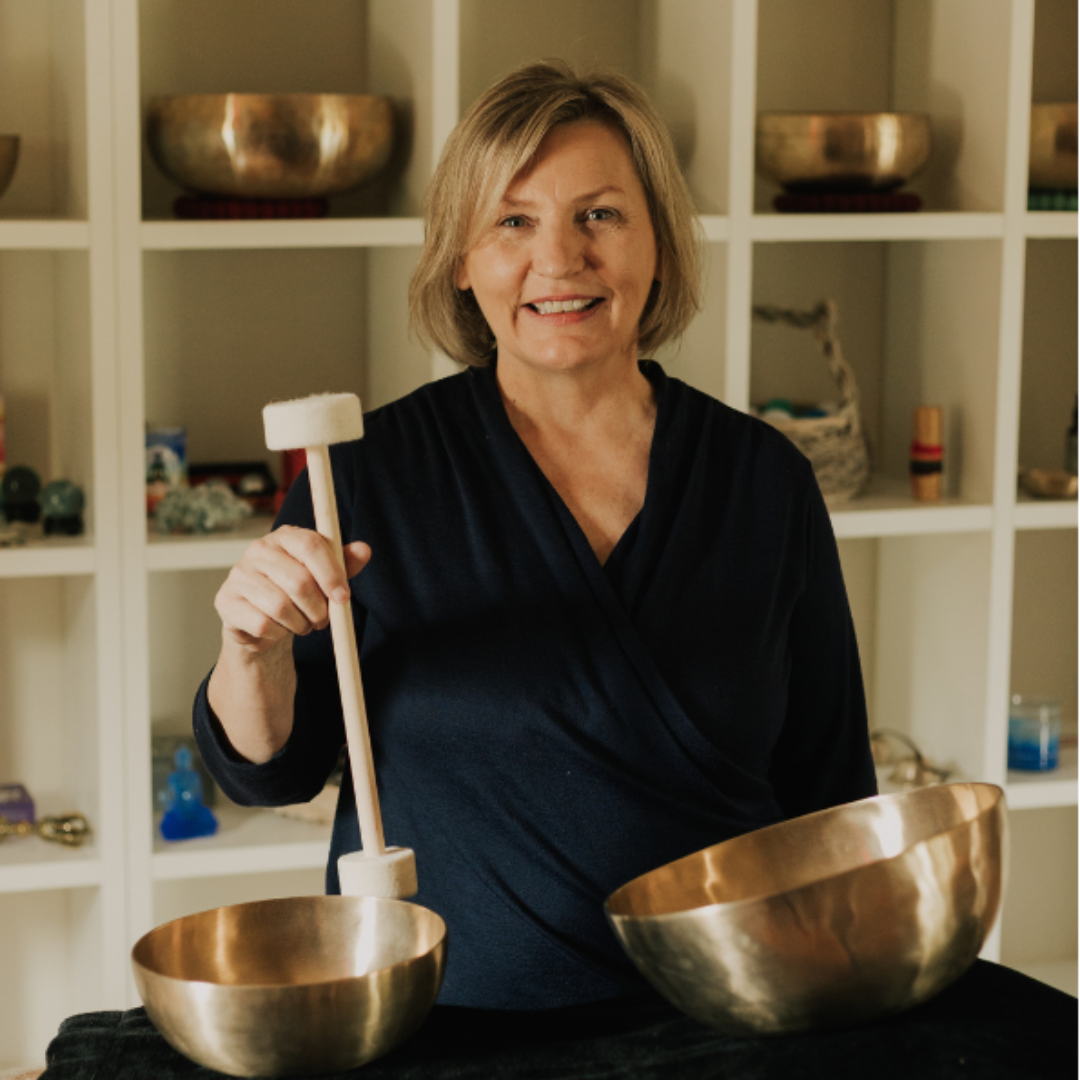
Photography by Alyssa Li Photography
Somewhere in your home, there’s a singing bowl.
Maybe you bought it in a shop that smelled of incense. Maybe it came from a late-night scroll that ended in an “add to cart” you don’t quite remember. Or maybe someone gave it to you years ago, and it has been sitting on a shelf ever since, beautiful and a little mysterious, faintly gathering dust. If you’ve admired it, tapped it once or twice, and never really known what to do with it after that, you are in wonderful company. Most people don’t. There is nothing wrong with a bowl that has only ever been admired.
But it does have a secret. It has been holding out on you.
You likely came to it for the sound, that warm, lingering tone that has carried meditation and chanting for centuries. That alone is a gift, and reason enough to love it. Yet many bowls hold a second gift, one that is easy to miss until someone points to it: vibration. Sound is the part you hear. Vibration is the part you feel, and it happens to be a language your body has known all along.
This is not a musical instrument
We tend to pick up a singing bowl expecting it to behave like a piano or a flute, one clear note we can arrange into a tune. A bowl won’t cooperate, and that is exactly what makes it interesting.
When you tap a good bowl, it doesn’t give you a single pure tone. It gives you a whole field of tones at once, a dozen or more frequencies layered together, shifting and rolling as the sound unfolds. There is no melody in there, no harmony in the tidy mathematical sense, no rhythm. It is closer to the sound of the everyday world, wind moving through trees, water over stones, a room full of quiet voices, except gathered up and offered back to you in a form you can actually settle into. Think of it as a kind of chaotic harmony: all that everyday complexity, organized just enough that the body can receive it instead of bracing against it.
I have come to love that the body isn’t built to relax into a perfect, sterile tone. It relaxes into something that sounds alive. That is what a bowl gives you.
Getting to know your bowl
No two of these bowls are quite the same. They are made for different things, too. Some are prized for their beautiful sound, some especially for their vibration (the therapeutic bowls used in bodywork are crafted for exactly this), and many for a bit of both. Some sing gorgeously to the ear. Others send a deep hum you can feel travel right up your arm. Part of the joy of starting to play is simply discovering what yours likes to do, and there is no wrong answer, only your bowl being itself.
Two playful ways to explore that:
Fill it with water. Pour it about three-quarters full, set it on something soft, and tap it gently with a padded mallet. Watch the surface. Some bowls send fine, shivering patterns racing across the water, and if you tap a little harder, they leap up and spit like a tiny fountain. Others answer more softly. Either way, it is mesmerizing, and it is also the best lesson in “gentle wins” you will ever get, because you can see with your own eyes how a soft tap does far more beautiful things than a hard one. And here is the part that stays with me: Your body is roughly seventy percent water. When you watch the water in the bowl come alive, you are looking at a small window into what a vibrating bowl can do inside you, those same waves moving quietly through your own tissues, wherever the sound reaches.
Feel for the bloom. Rest the bowl on your open palm while you play it, and notice how the tone behaves. Does it bloom, opening up, holding for a long, even while, then fading smoothly? Can you feel the vibration climbing up into your hand as much as you hear it? Or does its gift live more in the sound than in the buzz? There is no wrong answer here, either. You are simply getting acquainted.
Whatever you discover, there is a practice here for you. If your bowl turns out to be more of a singer than a rumbler, lean into the listening practices below and enjoy its voice. If it carries a strong vibration, rest it on your body and follow where that vibration travels. Neither is better; they are simply different doorways in. And if playing with it leaves you curious for more, a fuller vibration, a deeper sense of what sound is doing in the body, follow that curiosity. It is often the very thread that leads people toward learning this work more deeply.
How to wake it up
There are two ways to play, and I would start with the first.
The tap. Rest the bowl on your flat, open palm or on a small cushion. Take the softest mallet you have and give the outside a gentle, unhurried tap, then stop and simply listen. Let the tone rise and fade all the way to nothing. Most people rush right past that fade. Don’t. The fade is where the magic lives.
Here is something I remind every student: The tap is not a command you give the bowl. It is an invitation. A tense hand makes a tense sound. A hurried hand makes a thin one. The bowl will faithfully report the state of your nervous system every time you touch it, which is why, more than anything, it ends up teaching you. Softer than you think. Slower than you think.
The rim rub is the other way, the long, sustained tone you hear in films and spas. Hold the mallet like a pen, press the side against the outside rim, and trace slow, even circles, as if stirring a very patient pot. Keep steady pressure and a steady speed, and it will catch and begin to hum. And yes, the awful screech the first few times is completely normal. It only means you are going too fast or too lightly. Ease in, and it smooths out. Consider it your initiation.
Small practices for yourself
Here are four small practices, sorted by what your bowl does best. None of them needs to be earned or done perfectly. Each is simply a quiet way to spend two or three minutes coming home to yourself.
If your bowl carries a strong vibration
In your hands. Rest the bowl on one open palm, or balance it on your fingertips with them spread just slightly so it can still ring, and play softly and steadily for a few minutes. Feel the vibration travel up through your hand and into your arm. Then set it down and notice whether that hand feels different from the other, warmer, buzzier, more awake. That is the vibration doing its quiet work, and it is about the simplest kind thing you can do for yourself on a hard afternoon. (The same is lovely with the bowl resting against the soles of your feet, or even floating in your bath, where the vibration spreads through the water and all around you.)
On your belly, at the end of the day. Lie down, rest the bowl on your lower belly, and tap it slowly, letting each tone fade completely before the next. If you stay with it, you will feel the vibration rise and fall with your own breathing, in on the inhale, softening on the exhale. Night after night, there is something about this that quietly walks you back into your own body. It is my favorite way to end a day.
If your bowl is more of a singer
The listening reset. Find a quiet spot, and if it feels right, close your eyes, since sight tends to crowd out hearing. Tap the bowl once and give the sound your whole attention until you honestly cannot hear it anymore. Then stay in the silence a moment longer. Silence is not the absence of sound; it is where listening begins. Thirty seconds of this can gather a scattered mind back together.
A tone to bookend your day. Let the bowl mark your mornings and evenings. One clear tap to open the day, one to close it. Each time, follow the sound all the way down to nothing before you move on. Over time your body learns the cue, and the tone becomes a small doorway between one part of your life and the next.
A few practical notes
If you ever rest the bowl on bare skin and it feels cold, warm it first with a few minutes near a heating pad or a warm water bottle, and check the temperature before it touches you. Keep it somewhere it won’t get knocked to the floor, because a dented bowl loses its voice. Dust it with a soft, dry cloth. And please don’t get tangled in all the online rules about the one correct way to hold it, strike it, or face it. Some of that is a lovely tradition, and some of it is just noise.
One thing worth saying plainly: Sound and vibration are powerful. Used gently, they can help coax the body out of fight-or-flight and into the parasympathetic state, the “rest and restore” mode where we soften, settle, and return to ourselves. That is a real gift, and it deserves the same care you would give anything powerful. So stay curious, let comfort lead, ease off any spot that doesn’t feel quite right, and skip resting a bowl directly over something like a pacemaker.
The only thing you really need to know
For yourself, a singing bowl isn’t something you need to master. Mastery matters when you’re using it in a therapeutic setting with clients; that is a different craft, learned with care. But on your own, there is nothing to perfect. It is simply an invitation to slow down for a minute and let your body remember something it already knows how to do, which is to receive. You don’t have to get it right. You only have to get curious.
So go find it. Take it down from the shelf, wipe away the dust, and give it one gentle tap, then close your eyes and notice what happens. That is the beginning. Two minutes is enough. Your bowl has been waiting for you to discover that it was never just an ornament. It was an invitation all along.